
Designed for night-time use
HRV Breathing — Resonant Breathing App for Garmin Watches
Optimize your Heart Rate Variability for better recovery, sleep, and stress regulation.
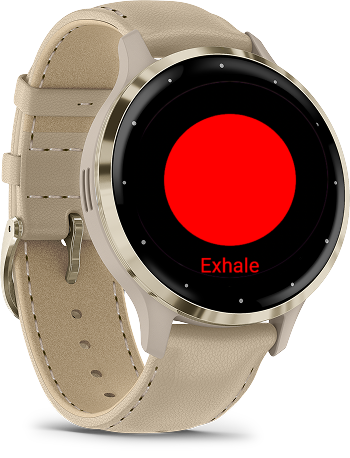
Available via the Garmin Connect IQ Store.
HRV Breathing is a resonant breathing app for Garmin watches, built for night-time use, with no blue light and minimal disruption of the circadian rhythm.
It is designed to improve heart rate variability (HRV) through slow, regular breathing (around 5–6 breaths per minute). Resonant breathing, also called coherent breathing, has been shown to support autonomic regulation, reduce stress and anxiety, lower blood pressure, and improve mood.
For athletes, resonant breathing may help with the parasympathetic shift after intense training — moving the body out of sympathetic dominance and into “rest and digest” mode, where recovery actually happens.
Why HRV Breathing?
The app was designed to solve a few key limitations we see in many existing resonant breathing apps:
True phone-free hygiene. The app runs directly on your Garmin watch. Leave the phone in another room and focus entirely on your breath — before sleep, or during the night if you wake up and can’t fall back to sleep.
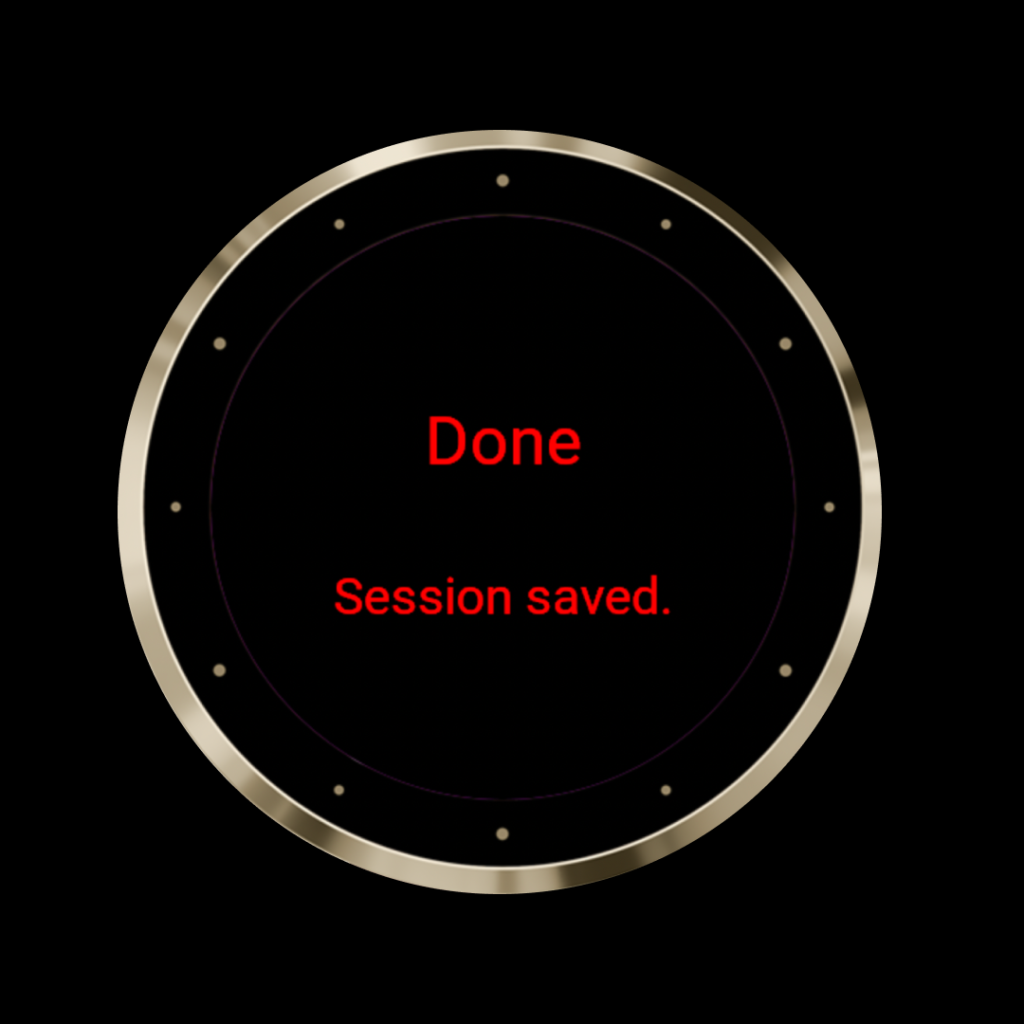
Sleep-ready design. A red-shifted interface eliminates blue light, protecting your circadian rhythm. Vibration guidance for inhale and exhale means you can close your eyes and follow the rhythm in total darkness. If you fall asleep mid-session, the app saves your activity automatically and shuts off.
Privacy first. HRV Breathing does not collect, store, or transmit any personal data. Sessions are recorded as standard Garmin activities through your watch — the app itself sends nothing beyond what Garmin handles natively.
Features
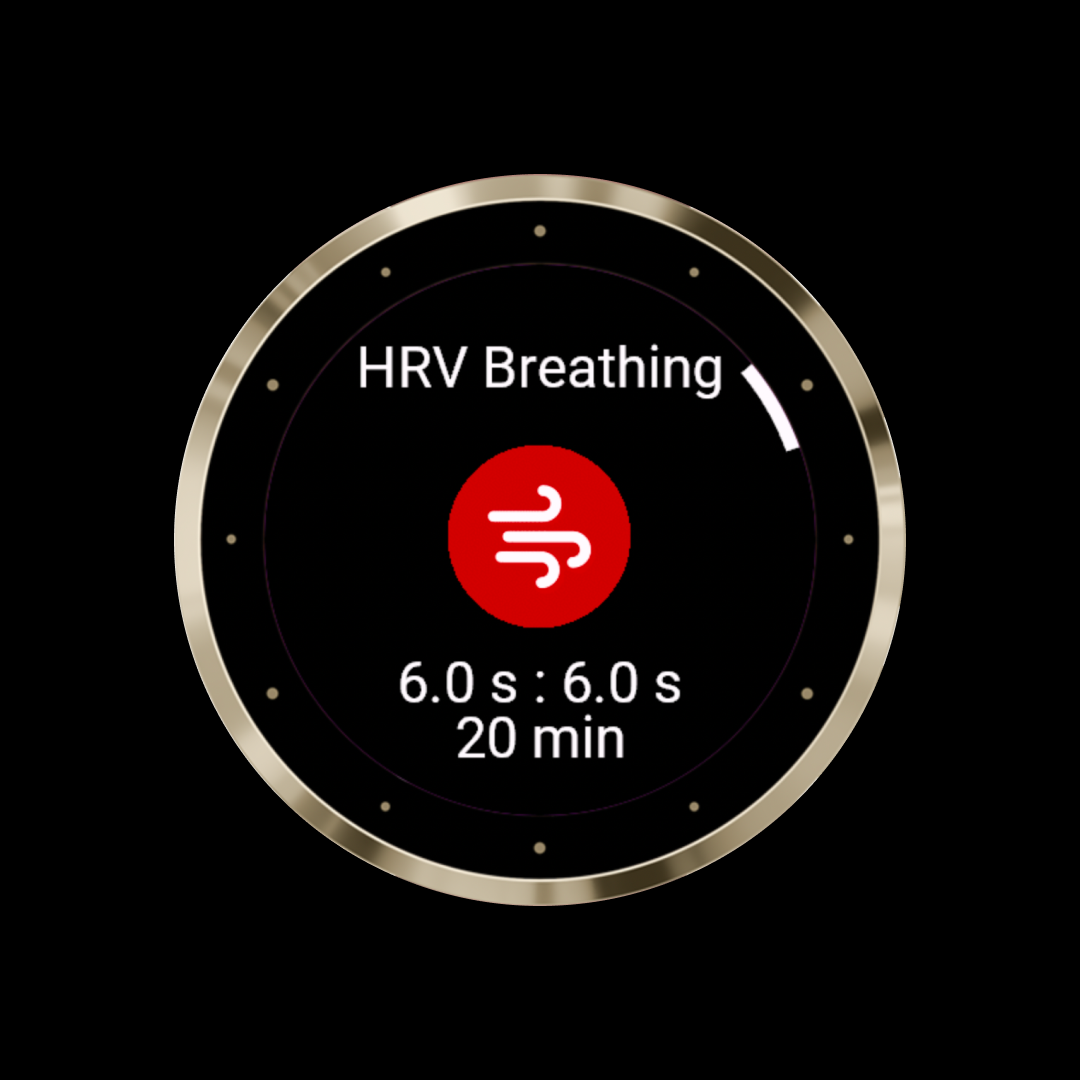
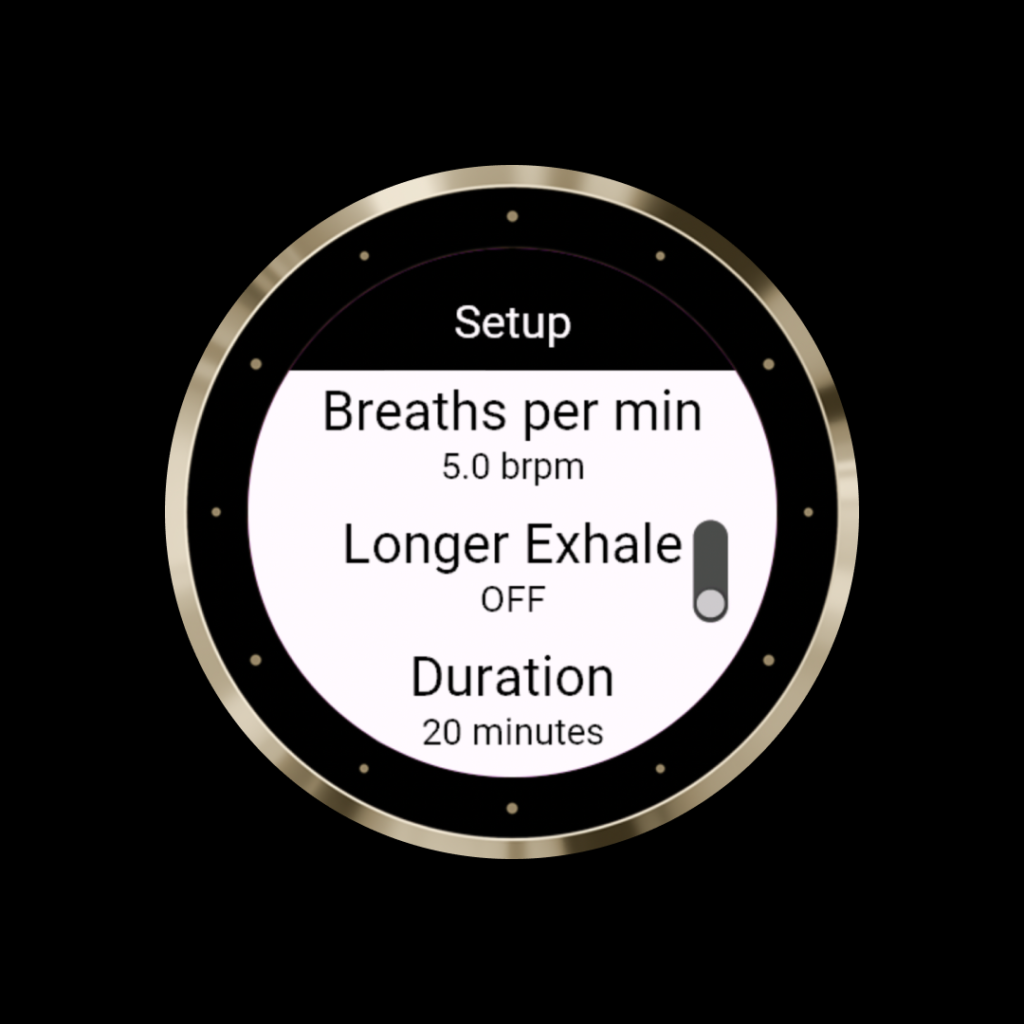
- Resonant breathing, configurable across 13 paces from 4.0 to 7.0 bpm in 0.2–0.3 bpm steps.
For higher granularity, enter any custom value in the Connect IQ mobile app. - Vibration guidance for inhale and exhale, with light/strong intensity options — designed for eyes-closed use in total darkness.
- Symmetric or longer-exhale breathing modes. Longer exhale is recommended during periods of high tension or sympathetic activation, as a longer exhale is associated with parasympathetic activation, which helps the body shift toward rest.
- Red-shifted display — no blue light, optimised for night-time use.
- Auto-save if you fall asleep mid-session.
- Optional countdown timer on the breathing screen.
- Minimal, distraction-free interface. We intentionally designed the app to focus on a single breathing modality only: resonant breathing. There are no additional modes or distractions.
About the breathing rate
Resonant breathing is most effective at each person’s individual resonant frequency — the breathing rate at which heart rate variability oscillations reach maximum amplitude. In the HRV biofeedback literature, this typically falls between 4.5 and 6.5 breaths per minute for adults, with some individuals resonating slightly below 4.5 bpm (Fisher & Lehrer, 2022; Lehrer et al., 2000). Taller and more muscular people tend toward the lower end of the range; smaller-framed people toward the higher end. Most people have the best effect at 5–6 breaths per minute.
The extended range (4.0–7.0 bpm) lets you explore further to find what feels right for you. The breathing should feel comfortable and calming. If you feel strained, short of breath, or lightheaded, the pace is too slow for you.
Typical session: 5–20 minutes. The biofeedback protocol uses 20-minute sessions for measurable effects on HRV. Shorter sessions (5–10 minutes) work well as a wind-down or in-the-moment reset; longer sessions are more typical when building a regular practice.
Screenshots
Availability
Available for Garmin watches via the Garmin Connect IQ Store.
A list of supported devices is available on Garmin.
Price: $3.99 (one-time purchase).
Privacy and use
HRV Breathing is designed to be quiet and private. It runs locally on your watch and does not collect or transmit personal data.
The app is intended for relaxation, recovery, and general well-being. It does not diagnose, treat, or prevent medical conditions.